Newark is a city of short drives and long commutes. It’s bordered by Fremont on three sides and the bay on the fourth, with I-880 running along its eastern edge and State Route 84 leading west toward the Dumbarton Bridge. Plenty of residents sleep in Newark and clock in somewhere else: a Peninsula clinic, a Union City classroom, a fulfillment center along the Nimitz corridor. That mix shapes who searches for American Red Cross CPR and First Aid certification classes in Newark, CA.
Some people need a certificate before a new job starts. Others are health sciences students completing program requirements. Parents want to feel ready at the next birthday party at the park. Most American Red Cross training falls into a handful of categories: CPR, First Aid, CPR/AED, and combined First Aid/CPR/AED, often in adult, pediatric, or combined adult and pediatric versions. Which one fits depends on what the certification is for, not on your zip code.
Key Takeaway: If you live or work in Newark, start by identifying who is asking for the certificate: your employer, school, licensing body, or simply yourself. That answer tells you whether CPR alone, First Aid alone, or a combined First Aid/CPR/AED course makes sense. Safety Training Seminars operates a Newark training center where local learners can review course options before enrolling.
What Are American Red Cross CPR and First Aid Classes?
CPR training teaches how to recognize a cardiac or breathing emergency and provide chest compressions and rescue breaths until advanced help arrives. First Aid training covers a wider range of situations, such as injuries and sudden illnesses that don’t involve a stopped heart but still need a prompt, calm response.
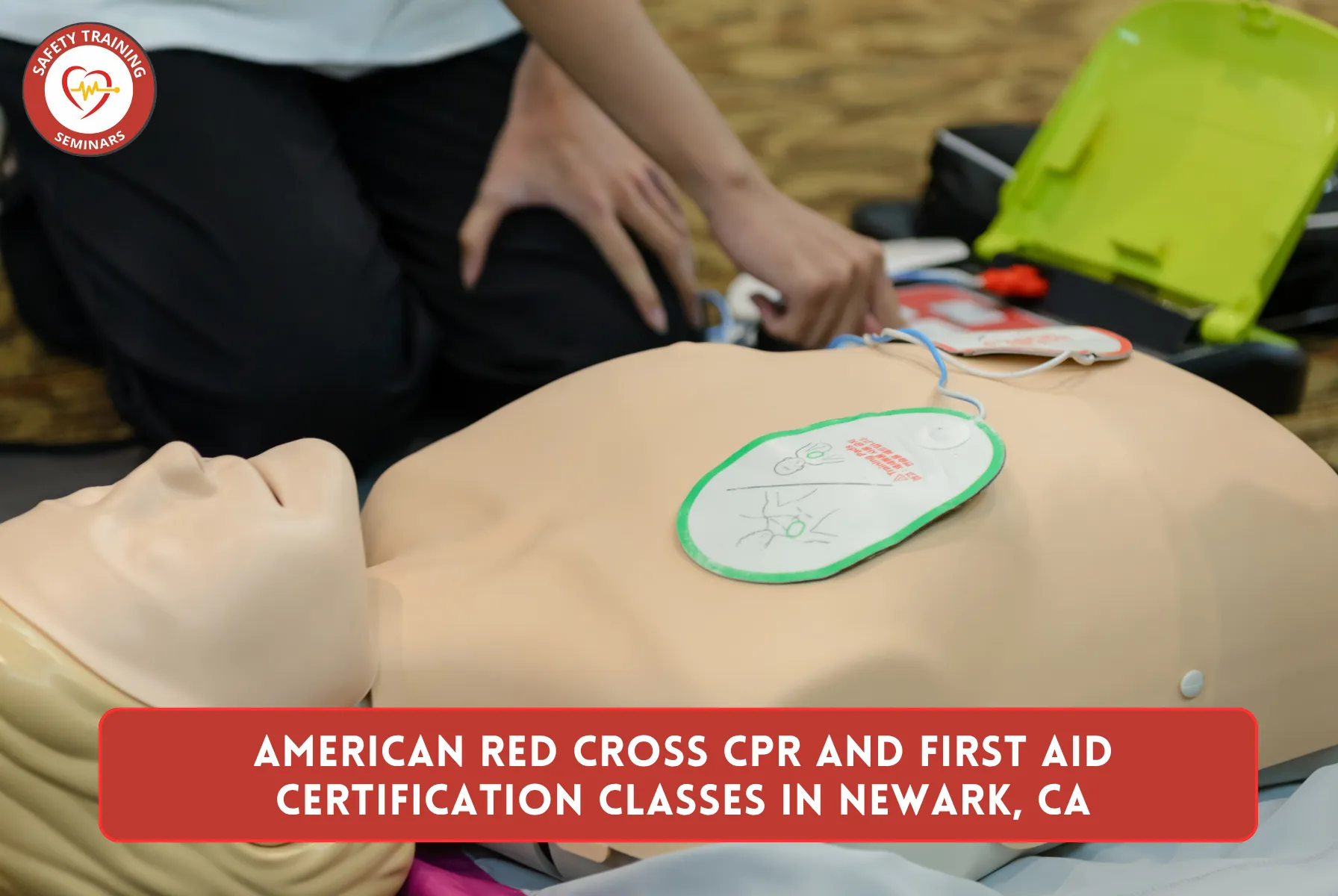
AED training sits between the two. An automated external defibrillator is designed to be used by laypeople during sudden cardiac arrest, so many courses teach AED use alongside CPR. That’s why course titles often read “CPR/AED” or “First Aid/CPR/AED.”
The two subjects travel together because real emergencies rarely stay in one category. Someone who collapses may also have fallen and injured themselves. Many employers and programs therefore request combined training.
Some American Red Cross courses use a blended learning format: an online portion completed first, followed by an instructor-led skills session. That in-person practice on manikins matters because compression depth, hand placement, and AED pad positioning are physical skills that are hard to judge from a screen. Formats and content differ by course, so review the exact course description before you register.
CPR Training: Adult, Child, and Infant
Not every CPR course covers the same age groups. An adult-only course may suit an office employee whose workplace requests basic CPR/AED training. Anyone who works with children, including teachers, nannies, and youth coaches, will usually want a course that includes child and infant techniques, since hand position, compression depth, and breathing technique change with body size.
Hands-on practice is typically where CPR skills come together. Many learners find that the rhythm of compressions only clicks once they’ve done several cycles on a manikin with an instructor watching.
One distinction deserves attention. Healthcare providers are often asked for Basic Life Support (BLS) rather than general CPR. If you’re a nurse, medical assistant, or clinical student, confirm which one your program or employer expects. Newark learners with healthcare requirements can review the Newark CPR, BLS, ACLS, and PALS course options to compare what’s offered.
First Aid and AED Training for Everyday Settings
First Aid training addresses the emergencies people are statistically more likely to see day to day: injuries, allergic reactions, breathing problems, and sudden illness. Combined with CPR and AED instruction, it gives learners a broader response toolkit.
This kind of training commonly appeals to:
- Childcare providers and preschool staff
- Teachers, aides, and after-school program workers
- Coaches and fitness instructors
- Employees designated as workplace safety responders
- Parents, grandparents, and in-home caregivers
- Healthcare support personnel in non-clinical roles
The American Red Cross describes its Adult and Pediatric First Aid/CPR/AED course as designed for learners who need certification that satisfies OSHA workplace or other regulatory requirements. Successful completion leads to a digital certificate valid for two years. Even so, whether a particular course meets your requirement is something to verify with the organization asking for it.
Who Typically Takes These Classes in Newark?
Health Sciences Students
Ohlone College’s Newark Center for Health Sciences and Technology, located on Cherry Street near I-880, emphasizes health, environment, and technology programs. Students in nursing or allied-health pathways may be asked to hold current CPR or BLS certification before clinical placements. Check your program handbook for the exact course name.
Commuting Workers
With SR-84 and the Dumbarton Bridge connecting Newark to Peninsula employers, many residents need training that satisfies an out-of-town employer. Taking a course close to home, then submitting the certificate to HR, is a common approach.
Teachers and Childcare Providers
Schools, preschools, and licensed childcare settings often request pediatric First Aid and CPR training. California childcare licensing rules have specific training standards, so confirm with your licensing contact or director before enrolling.
Parents and Family Caregivers
Newark’s residential neighborhoods include many multigenerational households. A parent caring for toddlers and an aging relative at the same time may want adult and pediatric First Aid/CPR/AED training, even without any formal requirement.
Coaches and Fitness Professionals
Youth sports leagues, gyms, and aquatic programs frequently ask staff and volunteers for CPR/AED or First Aid training. Requirements vary by organization.
How to Choose the Right Course
The most frustrating outcome is finishing a class and learning it wasn’t the one your employer wanted. This table offers a general orientation, not a legal or employment standard.
| Training Type | Typical Use | Often Considered By |
| CPR | Recognizing and responding to cardiac and breathing emergencies | Individuals wanting core emergency skills |
| First Aid | Responding to injuries and sudden illnesses | Workplace responders, caregivers |
| CPR/AED | CPR paired with defibrillator use | Office staff, fitness workers, coaches |
| First Aid/CPR/AED | Broader training across all three areas | Childcare providers, teachers, designated safety staff |
Before registering, ask your employer, school, healthcare organization, licensing body, or workplace safety coordinator three questions: Which exact course title is required? Do you need adult, pediatric, or both? Is an in-person skills session necessary? Getting those answers in writing saves time and money.
Local Training Considerations for Newark Residents
For many Newark learners, the practical question is timing. Commuters dealing with I-880 traffic may prefer a location they can reach without crossing a bridge. Students at the Cherry Street campus may want a skills session that fits between classes. Parents often need weekend or evening options.
Blended learning can help here. Completing the online portion at home and then attending a shorter in-person skills session reduces time away from work or family. Confirm the specific format when you register, since not every class runs the same way.
Safety Training Seminars in Newark
Safety Training Seminars provides CPR and First Aid training at its Newark location: 8407 Central Ave, Suite 2034, Newark, CA 94560. For residents of Newark and nearby Fremont and Union City, a local center can make the in-person portion of training easier to schedule.
Before registering, review the CPR and First Aid classes in Newark page for current course titles, formats, and scheduling. Compare the course name to what your employer or school requested, note whether a skills session is included, and reach out with questions if anything is unclear.
Why Consider Safety Training Seminars for CPR and First Aid Training in Newark, CA?
A few practical factors stand out. The training center sits on Central Avenue within Newark itself, which limits travel for local residents. Course categories span CPR, First Aid, and AED training, along with healthcare-focused options like BLS. Course information and registration are available online, so you can compare options before committing. For learners who need a clear path from “my employer asked for this” to a completed certificate, those details matter.
Frequently Asked Questions
Can Ohlone College students in Newark take CPR classes off campus?
Usually, yes. Many students complete CPR or BLS certification through an outside training provider. However, health sciences programs often specify the exact course required, and some accept only certain course types. Check your program’s requirements before registering so the certificate you earn counts toward your clinical or program prerequisites.
Does First Aid training automatically include CPR?
Not always. Some courses teach First Aid on its own, while combined courses such as First Aid/CPR/AED include all three. Read the full course title carefully. If your employer requested “First Aid and CPR,” a First Aid-only class likely won’t satisfy the requirement.
I commute from Newark to a Peninsula employer. Will they accept a local certificate?
Often, but you should confirm. Employers set their own standards, and the location where you trained usually matters less than the course title and whether a hands-on skills session was completed. Ask HR which course name they accept, then take that course at a convenient Newark-area location.
How long does an American Red Cross certificate last?
Many American Red Cross CPR and First Aid certificates, including Adult and Pediatric First Aid/CPR/AED, are valid for two years. Validity can differ by course, so check the details on your specific certificate. Some employers ask staff to renew on their own schedule.
Do Newark parents without a job requirement benefit from these classes?
Yes. Many parents and caregivers take CPR and First Aid training for personal readiness. A course covering adult, child, and infant skills tends to suit families with young children or older relatives at home. No employer approval is needed, so simply choose the course that matches your household.
What should I check before booking a class in Newark?
Start with the exact course title your employer, school, or organization requires. Then confirm the age groups covered, whether blended learning or fully in-person training is acceptable, and the class format and schedule listed on the provider’s course page.
Ready to Get Certified in Newark?
CPR training focuses on cardiac and breathing emergencies, while First Aid covers the injuries and sudden illnesses that make up much of real-world emergency response. Combined courses bring both together, often with AED instruction. The course that’s right for you depends on who is asking for it and why.
If you’re a Newark student, commuter, parent, or employee, begin by confirming your exact requirement with your employer, school, or organization. Then visit the Safety Training Seminars Newark course page to compare available CPR and First Aid options and choose a class that fits your schedule. A few minutes of checking now helps you avoid retaking training later.