If you work in one of Newark, CA’s warehouses or distribution centers, chances are your employer has mentioned CPR or BLS training at some point — either as a safety requirement, a promotion prerequisite, or something the HR department is now tracking for compliance. The two certifications sound similar but serve different purposes, and knowing which one your role actually calls for can save you from signing up for the wrong class. This guide walks through what BLS CPR certification covers, how it differs from standard CPR training, and what to expect before you register for a course in Newark or a nearby East Bay city.
Key Takeaway
Most warehouse and distribution-center staff only need standard adult CPR and First Aid, but employees in safety, security, or on-site medical response roles are often required to complete a BLS CPR Certification Course instead. BLS training includes more structured, provider-level skills such as team-based CPR and AED use, and it typically requires renewal every two years.
BLS vs. Standard CPR: Why the Distinction Matters for Warehouse Roles
Basic Life Support, or BLS, is a certification level originally designed for healthcare providers and workplace responders who may need to act as part of a coordinated response team. It covers high-quality CPR technique, AED operation, relief-rescuer switching, and recognizing cardiac emergencies quickly under pressure.
Standard CPR and First Aid training, by comparison, is built for general employees who want to respond to a choking, cardiac, or injury emergency until professional help arrives. It’s shorter and doesn’t include the team-response components found in BLS coursework.
For most general warehouse associates, pickers, and forklift operators, a CPR/First Aid combination course meets the practical need. Employees designated as safety leads, security personnel, or emergency response coordinators are more likely to be asked for BLS specifically, since their role may involve responding before EMS arrives or working alongside a facility’s AED program.
Who Actually Needs BLS Certification in a Distribution-Center Setting
Not every job title on a warehouse floor requires BLS. It tends to be requested for a specific set of roles:
- Site safety officers and safety committee members
- Facility security or loss-prevention staff
- Shift supervisors designated as first responders
- Employees assigned to maintain or operate an on-site AED
- Warehouse nurses or on-site medical staff at larger fulfillment centers
If your job description doesn’t mention emergency response duties, ask your HR or safety manager which certification level is actually required before enrolling. Some Newark employers list “CPR certification” generically in job postings without specifying BLS, and confirming in advance avoids paying for a longer course than necessary.
What Happens During a BLS Course
A typical BLS class combines instruction with hands-on skills practice rather than lecture alone. Expect the session to move through:
- Core content review — recognizing cardiac arrest, calling for help, and understanding chain-of-survival concepts.
- Hands-on CPR practice — compressions and rescue breathing on a training manikin, usually practiced individually and then in a team-based scenario.
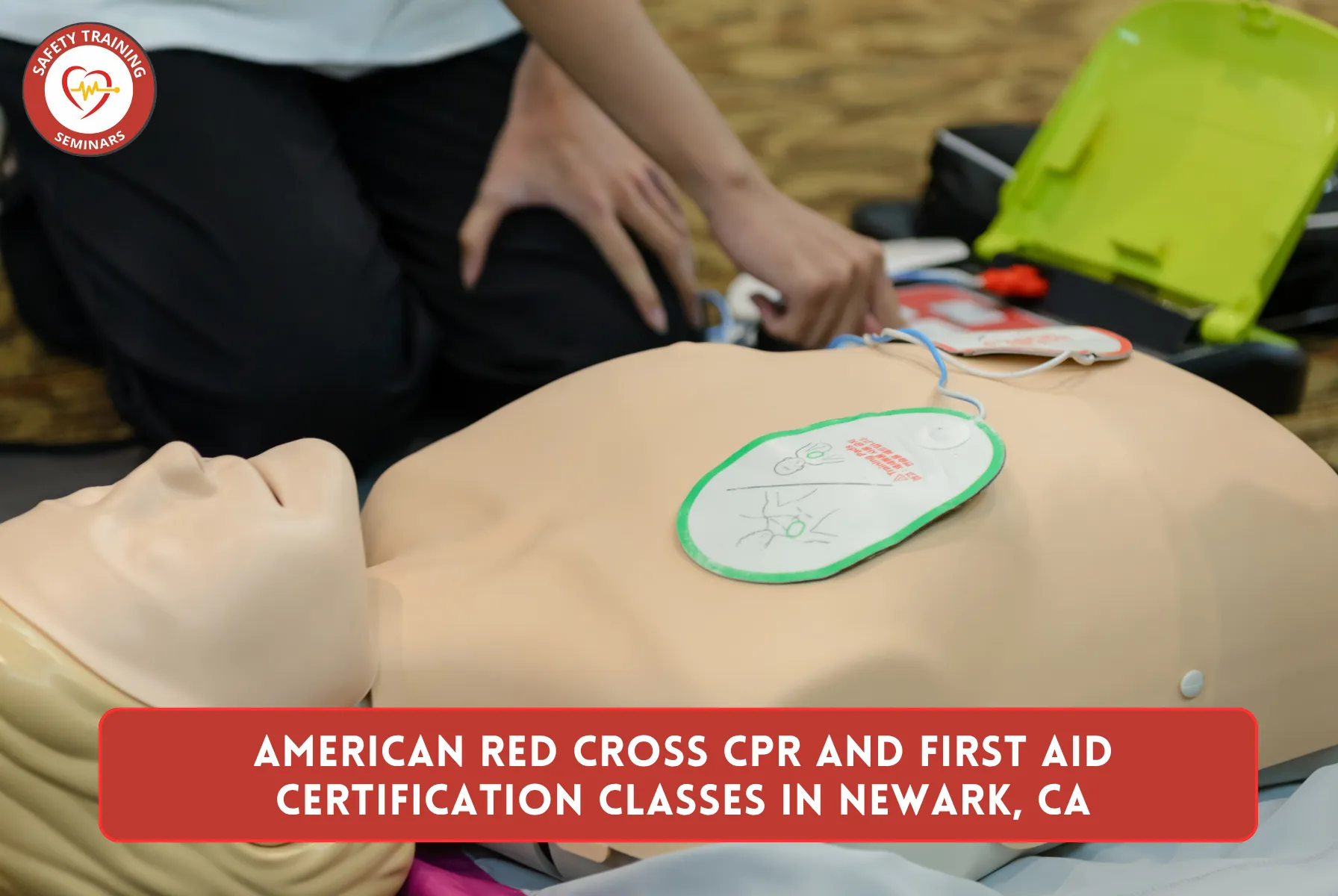
- AED training — hands-on use of a training AED unit, including pad placement and safety checks.
- Skills evaluation — an instructor observes technique to confirm each participant meets the required standard.
- Written or online knowledge check — a short assessment covering the material.
Because BLS is built around team response, instructors typically pair participants for compression-and-breathing rotations, mirroring how a real workplace response would function with more than one person present.
Online, Blended, and In-Person Options: What to Know Before You Register
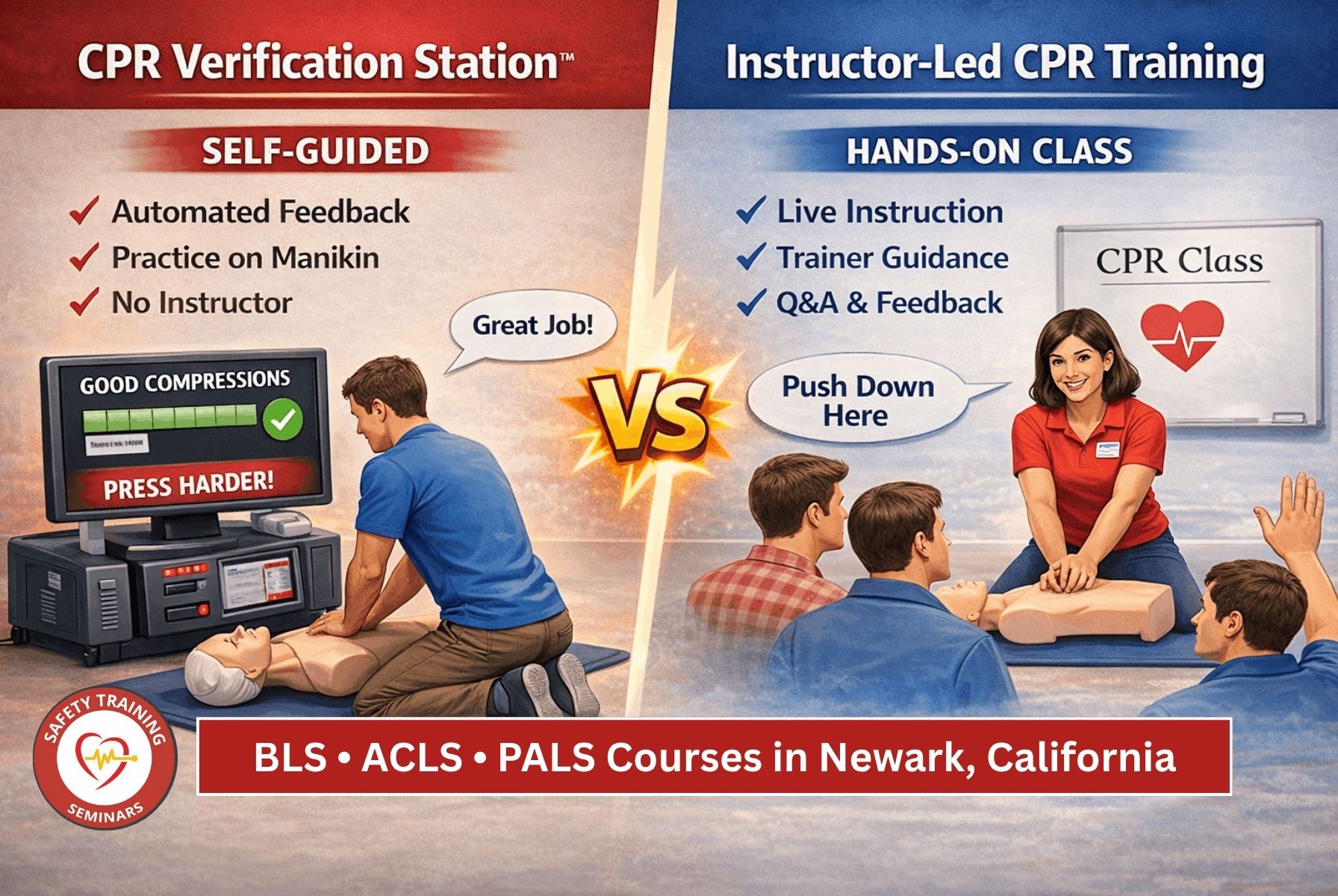
Warehouse schedules rarely line up neatly with a single class time, which is why blended-learning formats have become common. A blended course lets you complete the cognitive portion online at your own pace, then attend a shorter in-person session to complete the hands-on skills check.
A fully online-only certificate, without any in-person skills verification, is generally not accepted as a valid BLS credential for workplace purposes, since hands-on competency can’t be confirmed remotely. If your employer requires BLS specifically, confirm whether they’ll accept a blended format or expect a fully in-person class, since requirements can vary by company policy.
How Long BLS Certification Lasts and When to Renew
BLS certification is generally valid for two years from the date of course completion, after which a renewal course is required to stay current with updated resuscitation guidelines. Many employers ask staff to renew 30 to 60 days before expiration to avoid a lapse in coverage for scheduling or compliance purposes.
If your certification has already expired, some training centers require you to retake the full initial course rather than a shorter renewal class, since requirements differ by provider. Check directly with whichever training center issued your original card.
Attending Class From Newark or a Nearby East Bay City
Newark sits within driving distance of several communities where distribution and logistics work is common, including Fremont, Hayward, and Livermore. Employees commuting from these areas, or from further north in Alameda County, often have flexibility in choosing a class date and location that fits around shift rotations rather than being limited to a single city.
If your schedule makes a Newark class difficult to reach, Safety Training Seminars also offers CPR, BLS, and ACLS training in Dublin, CA, which may be a shorter drive for employees commuting from the Tri-Valley area. Warehouse teams based closer to the Berkeley or Emeryville corridor may find it more practical to review the BLS and ACLS course schedule in Berkeley or the CPR and BLS training options in Emeryville instead, since class availability and format can differ slightly by location.
Training in Newark With Safety Training Seminars
Safety Training Seminars operates a Newark training location at 8407 Central Ave, Suite 2034, Newark, CA 94560, offering BLS CPR Certification courses along with related programs such as ACLS and First Aid. For warehouse and distribution-center staff, this location provides an option close to industrial and logistics employers in the Newark area without needing to travel to San Francisco or the South Bay for a class.
Before enrolling, review the course page for your role’s requirement, whether that’s a BLS provider course, a renewal class, or a combination CPR/First Aid session, since format and duration can vary. Employees who split time between Newark and Alameda facilities may also want to check the CPR and BLS certification schedule in Alameda to compare available dates.
Frequently Asked Questions
Does my warehouse job require BLS or standard CPR certification? It depends on your specific role. General warehouse associates typically need standard CPR and First Aid, while safety leads, security staff, and AED-designated employees are more often required to hold BLS. Confirm the exact requirement with your employer’s HR or safety department before registering.
Is an online-only BLS certificate accepted by employers? Usually not on its own. Most workplaces require the hands-on skills portion of BLS to be completed in person, since an online-only certificate can’t verify physical technique. Blended courses combining online coursework with an in-person skills check are typically accepted, but confirm this with your employer.
What should I bring to a BLS class in Newark? Bring a valid photo ID and any pre-course completion certificate if you registered for a blended format. Comfortable clothing is recommended, since the hands-on portion involves kneeling and repeated movement.
How long does a BLS course take to complete? Length depends on format and whether it’s an initial certification or renewal. In-person courses generally run longer than blended options, since blended formats shift the lecture portion online ahead of time.
Can I attend a class outside Newark if it fits my shift better? Yes. Safety Training Seminars offers courses at several East Bay locations, so employees commuting from Alameda, Berkeley, Dublin, or Emeryville can often find a class closer to home rather than being limited to the Newark schedule alone.
Choosing the Right Course for Your Role
The most useful first step is confirming with your employer exactly which certification your position requires, since BLS and standard CPR serve different purposes and aren’t interchangeable for compliance purposes. Once you know whether you need BLS, a combination CPR/First Aid course, or a renewal class, you can select a format — in-person or blended — that realistically fits your shift schedule.
Safety Training Seminars’ Newark location offers BLS CPR Certification courses for distribution-center and warehouse staff, with additional East Bay options in Alameda, Berkeley, Dublin, and Emeryville for employees whose commute makes another city more practical. Review the course page for your preferred location to see current class formats and confirm which certification level matches your job requirement before you enroll.